
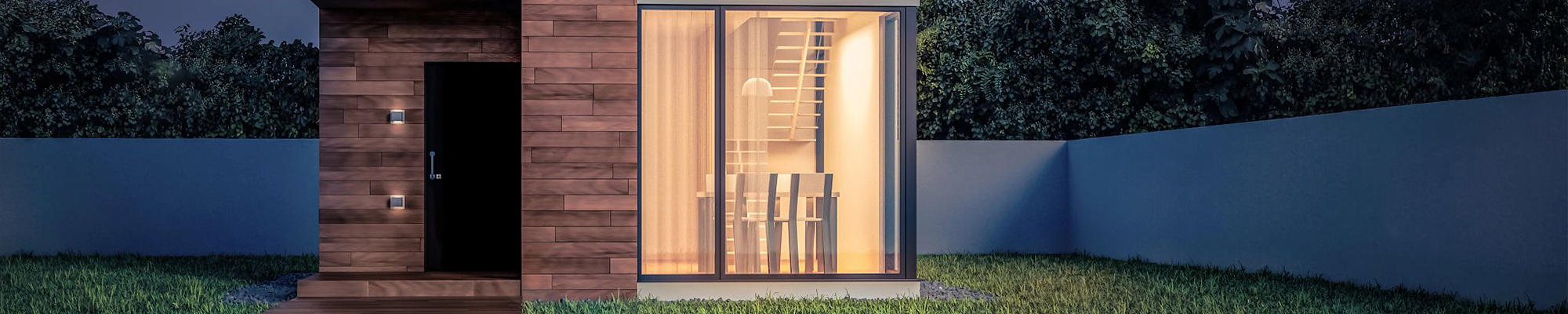
The Tiny Home Trend
You’ve always been told that bigger is better, right? Well that’s not necessarily the case if you're following the current housing trend. All across the country, people are downsizing in a big way. Families are moving out of their five-bedroom houses and into 500-square-foot homes. These compact dwellings are known as "tiny houses," but their popularity is no small thin
The Tiny House Revival
During the counterculture movement of the 1960s, young people shunned the ways of their consumption-driven predecessors and chose to live sparsely. This recent tiny house resurgence, however, is not politically driven. It is a result of the financial and housing crisis that struck the country several years ago. Tiny houses give people the chance to get rid of unnecessary possessions and still live both independently and comfortably.
Environmentally Friendly
This home minimization movement, although originally financially motivated, has now evolved. Some people have embraced the tiny house trend as a means to live a more environmentally responsible lifestyle. According to Country Living magazine, tiny houses use 26,000 fewer pounds of CO2 per year than a normal house of around 2,500 square feet. The article also estimates that while it takes an average of seven full logging trucks to build a regular house, you can build two tiny houses from the contents of a single logging truck.
Additional Savings
In addition to smaller lumber and energy requirements helping to save the environment, tiny houses also help save your wallet! AARP reports that tiny houses are 11 times less expensive than the average home, and 68 percent of tiny homeowners have no mortgage. Because they are spending less on HVAC and electricity, tiny house owners are able to use their savings to do more of the things they love.
